
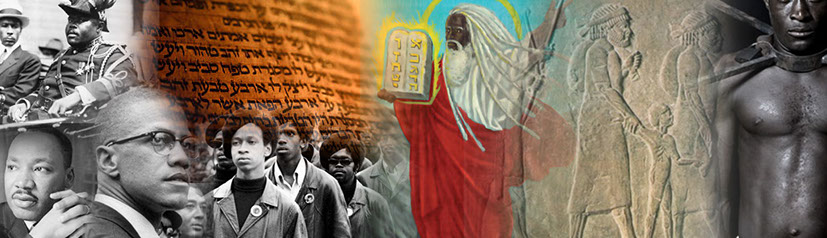
This section takes us through the stages of development that the nation of
Israel went through from ancient times until today. It began with the great
father Abraham, continued with his son Isaac and then his grandson Jacob who
had 12 sons, each becoming the father of the 12 tribes of Israel. The existence
of Israel is undeniable as the entire Holy Scriptures (Old Testament) was
written by and about them. The great teacher and Law-giver Moses, of whom
the first five books of the Holy Scriptures is ascribed to, was from the tribe
of Levi. The great general Joshua, who lead and won the intial conquests of
the land of Israel, was from the tribe of Ephraim. The judge Samson, dubbed
the strongest man ever, was from the tribe of Dan. The renowned King David,
the warrior and author of many Psalms, and his son King Solomon, wisest man
to live and author of Proverbs and Ecclesiastes, were from the tribe of Judah.
The prophet Jonah, known for his survival in the belly of a fish, is of the
tribe of Zebulun.
Ancient Israel tracks Israel's progression from 2000 BCE until 400 BCE citing
many Biblical and historical references.
From Arica to the TransAtlantic Slave Trade cites Israel's emergence in Africa
after being dispersed from their land and the transport of many Israelites
to the New World in accordance with prophecy. Many tribes within Africa today
trace their roots to ancient Israel through customs that were handed down
and in some cases DNA testing.
Present Day Israel tells of the growing population of Israelites with knowledge
of self in the Americas.
Israel is universally known as the chosen people of God as explained in the
Bible specifically the Old Testament, which is known as the Hebrew Bible. The
Old Testament itself is solely a historical description of the civilization,
traditions, events, conquests and prophecies related to the nation of Israel.
This description begins with the calling of Abraham in Genesis (circa 1738 BCE)
to the reformation of the nation of Israel with a promise of further liberation
through the prophecies of Malachi (circa). Outside of the Bible not much is
known, heard or seen of the nation of Israel. However, through the careful research
of theological, anthropological and archeological scholars (and in some cases
DNA testing) many details have been drawn for the culture, location and influence
of the nation that produced well-known men such as Moses, King David and Ezra.
Although there is question as to the actual existence and whereabouts of the
nation of Israel today their moral code, the Torah (Hebrew for law or instructions),
which includes the renowned Ten Commandments is the basis of the world’s
three major religions: Judaism, Christianity and Islam. The covenant, or promise,
that God made with the nation of Israel and the portion of land designated to
them in the Middle East, as described in the Bible, has caused many groups of
people to claim to be this nation and has given rise to much conflict in the
Middle East and beyond. With or without Israel being in its proper place and
position the world has always looked towards Israel’s customs and culture
for social and economical balance.
We are first introduced to the name “Israel” in the Thirty-Second
(32nd) chapter of the book of Genesis. Verses 25-29 illustrate a scene where
Jacob, who is the progenitor of the nation of Israel, wrestles with an angel
of God. As a result of Jacob prevailing in this struggle he is blessed. “And
he said, ‘No longer will it be said that your name is Jacob, but Israel,
for you have striven with God and with men and have prevailed.’”
The name “Israel”, properly pronounced “Yisrael” in
Hebrew, itself means “He will strive with God” from the conjugation
of the Hebrew words “sarah”, meaning to struggle, persist or persevere,
and the word “El”, meaning God. From thence began the legacy of
Israel who had twelve sons becoming the twelve tribes of Israel, their redemption
from slavery in Egypt and deliverance into the Promised Land formerly known
as Canaan and now called Israel or Palestine.
Before all of this could have taken place a significant man, named Abraham,
stepped unto the scene. This marks the beginning of what is called by Judaists
the Patriarchal Period of Israel. It continues with Abraham’s son, Isaac,
and concludes with Abraham’s grandson, Jacob (Israel). This period is
generally believed to have taken place between 2000 and 1600 BCE but closer
study points to Abraham’s birth in 1813 BCE and Jacob’s death in
1506 BCE. We are first introduced to Abraham (as Abram) in the twelfth (12th)
chapter of Genesis. Abraham is said to have come from Ur of the Chaldeans, migrated
to Haran with his father Terah, and finally into the land of Canaan with his
wife Sarah (then Sarai), his nephew Lot and his servants at the command of God
at the age of seventy-five (75). Ur of the Chaldeans was a city in Sumer belonging
to a broader area commonly known as Mesopotamia. Mesopotamia is agreed to be
the beginning (or cradle) of civilization (which contains Babylon and Nineveh)
and is located within the Fertile Crescent in modern-day Iraq. The title “Fertile
Crescent” is given to this area because of its flourishing land which
is well-watered by the rivers Euphrates and Tigris. Abraham’s journey
shows him traveling from Ur along the Fertile Crescent into Canaan (as opposed
to a direct route across the Arabian Desert which would have been more difficult).
Abraham’s lineage can be traced from Shem (one of Noah’s sons) as
such: Shem, Arpachchad, Shelah, Eber, Peleg, Reu, Serug, Nahor, Terah, Abraham.
(This lineage is important in understanding of which group of people and what
area(s) the nation Israel derived from. Of the three sons of Noah, Shem, Ham
and Japheth, all of the nations of the earth were derived. Shem’s descendants
formed the Asiatic nations, Ham’s sons formed the African nations and
Japheth’s sons formed the European nations. Many sources agree with this
point but the proof is beyond the scope of this document). Abraham’s calling
and his observance of God was a stark contrast to what other nations around
him in that time and along his travels worshipped their gods. He worshipped
“one” unseen and intangible God (Creator) without idolatry and barbaric
practices. His worship was passed on to his son Isaac and unto his grandson
Jacob in what they called a covenant with God.
During Jacob’s lifetime, he and his family migrated into Egypt due to
a famine which overspread the known world. This famine allowed Egypt to become
a dominant world power because of the dependence other nations had for it. As
told in Genesis, Egypt’s sustenance during the famine was afforded by
Joseph, Israel’s 11th son. Joseph was sold into Egypt by nine of his brothers,
eventually became a prisoner in Egypt, released from prison to interpret a dream
for Pharaoh and ascended to second-in-command in Egypt because his interpretation
delivered Egypt from the looming famine. A foreigner turned prisoner ascending
to such power within the Egyptian society seems strange but certain occurrences
within Egypt made allowance for Joseph to gain acceptance in the sight of Pharaoh.
Egypt, which was founded as a Hamite nation by the name Mitzrayim (who was a
son of Ham) was overthrown by the Hyksos (Shepherd Kings), a primarily Semitic
group of people. Their initial migration into Egypt came at a time when there
was a famine in the Earth and they eventually dominated around 1720 BCE. This
temporary control of Egypt by the Hyksos allowed their king, then Pharaoh of
Egypt, to empathize with Joseph who was also a Semite. These circumstances also
made allowance for Jacob and his remaining sons to sojourn in the best part
of Egypt, Goshen, which had adequate land for their herds. This separation was
also caused because “all shepherds are an abomination to Egyptians.”
This allowed Jacob and his children to live in seclusion, grow into a large
nation and perform their duties and worship of God exclusive of Egyptian scrutiny
and intervention. The death of Jacob (circa 1506 BCE) marked the end of the
Patriarchal Period of Israel. However, this was only the beginning for the nation
that would continue to “struggle with God and with man” in an attempt
to assert themselves as the holy nation of God.
“And a new king arose over Egypt who did not know Joseph.” During
their stay in Egypt a new regime took over overthrowing the Hyksos and expelling
them from Egypt around 1580 BCE. This new regime in expelling the Hyksos sought
any means necessary to prevent foreign rule over their nation again. This even
meant the genocide of the very people who were responsible for Egypt’s
status as a world power. Harsh slavery was inflicted upon the nation of Israel
who dwelt in Egypt and when that did not work to the liking of the Egyptians
an extermination of all newborn Israelite males was instituted. During this
time a man named Moses was born and according to the Bible it was him whom God
used to deliver the nation of Israel out of their bondage in Egypt and fulfill
the covenant He made to Abraham, Isaac and Jacob to give to their children the
land which was promised. This began the Mosaic Period of Israel (circa 1393)
which is arguably the most important period for the nation of Israel. However,
without the Patriarchal Period none of this would have taken place. Moses’
role however is very important in the succession of Israel as a nation and in
bringing forth the ideals of the Torah, this brought about the notion of Moses
being the Lawgiver. The Torah is the rule of law which the nation of Israel
lived by and which later became the basis of Judaism and its offshoots Christianity
and Islam. As the Bible tells it, Moses was born during the time a decree was
made by the Pharaoh of Egypt to slay all newborn Israelite males however, Moses’
mother hid him in an ark which they sent it down the Nile river where it fell
into the hands of Pharaoh’s daughter. Pharaoh’s daughter adopted
Moses and had his mother nurse him. This caused Moses’ to grow up in the
royal house of Egypt, studying in their schools, while knowing his true heritage.
At age 40 Moses fled from Egypt because they sought to punish him for slaying
an Egyptian who was beating an Israelite. He returned to Egypt at age 80 at
the command of God who appeared to him and told him to go to Egypt because He
would cause Pharaoh to release the nation of Israel. After God inflicted Egypt
with ten plagues, including the slaying of all firstborn males (man and beast)
in Egypt on the infamous “Passover” night, the nation of Israel
was released from their bondage in Egypt (circa 1313 BCE.). After deliverance
at the Red Sea (or historically the sea of reeds) the children of Israel were
gathered together at Mount Sinai to be given the Law of God and received the
Ten Commandments from God Himself. The remaining commandments of the Torah were
given to Moses by God after a 40 day and 40 night stay on Mount Sinai and given
to the nation of Israel by Moses. At this point the covenant of God with the
nation of Israel was consummated causing Moses to be a pivotal figure in the
advancement of the nation of Israel. After a 40 year wandering in the wilderness
because of the nation of Israel’s disobedience to God Moses died marking
the end of the Mosaic Period (circa 1273 BCE).
Israel enjoyed a rise in society during the Period of the Judges (circa 1200-1000
BCE). This started with the conquests of Joshua and continued with the deliverance
from the oppression of surrounding nations by the hand of judges such as Samson
and Jepthah. It concluded with Samuel who was also the beginning of a line
of prophets who were sent by God to warn of eminent danger for disobedience.
Israel’s rise in society continued within the Monarchial Period (circa
1000-587 BCE) through the likes of Kings Saul, David and Solomon. A decline
proceeded shortly after the reign of King Solomon (circa 931 BCE) with the
secession of the Northern Kingdom from Judah, Benjamin and Levi and with the
influence of surrounding nations upon Israel causing them to stray from God.
The decline continued until the Assyrian exile of the Northern Kingdom around
721 BCE and finally with the Babylonian exile of Judah and the destruction
of the Temple around 587 BCE.
Israel enjoyed a brief period of Reformation after the Babylonian exile during
the Persian Empire’s rule with the edict of then king of Persia, Cyrus,
who allowed those of the nation of Israel living in exile to return to Jerusalem
to rebuild the Temple. This was completed between 520 and 515 BCE. Later on,
the political affairs of the nation were headed by Nehemiah while the spiritual
and social affairs were directed by Ezra. The two together reformed the social
and spiritual structure of Israel including the removal of foreign wives and
children from their midst and the sanctification of the Sabbath day. It was
this Ezra who is responsible for the creation of the synagogue and the early
canonization of the Torah as the Pentateuch (Five Books of Moses).
The Reformation Period of Israel ended around 400 BCE and Israel was not
able to recover and therefore went through further exile by other nations
(such as Greece followed by Rome) causing their culture and identity to be
lost. This culture however has been retained within the pages of the Bible
and also discovered by scholars who study the Bible and sequential texts as
well as those excavating the land of Israel. Israel’s culture has also
evolved into what is known today as Judaism and has taken many forms as it
spread through different nations and culture often assimilating and adapting
to its regions of practice.
For centuries Israelites have dwelt in the African Interior. Tribes of Israelite
descent such as the Lemba of Southern Africa and the Falasha of Eithiopia are
a present day testament to the vast ancient Israelite migrations into the African
continent. Literature from the ancient Israelite community of Elephantine located
in southern Egypt has been recovered providing proof of a thriving Israelite
population. Also the Israelite population in Cyrene which was located in Lybia
were also well known and historically documented. *The historian Philo (40 BCE-40
CE), who lived in Alexandria, Egypt, stated that “One million Hebrews
resided in Libya and Egypt from the Catabathmos, to the border of Ethiopia.”
Many of the Israelite communities located in the north and east of Africa
began to become less populated and other disappeared altogether. The rise
of Christianity in the 4th and 5th centuries C.E. and the rise of Islam in
the 8th century C.E. caused the oppression, slavery and death of many non-converts.
The Israelites who were well known for non-compliance and defiance of forced
religion, ideology and culture, were forced to migrate in effort to avoid
Christian and Islamic persecution. The Arab/Islamic invasion of North-East
Africa prompted the migration of Israelites to flee to Central and West Africa.
The ancestors of African Americans came from West Africa during the era of slavery.
That particular region of Africa was once home to a number of Israelite tribes
that migrated from North and East Africa over many centuries. In speaking of
these migrations, Dr. Yoseph A. A. ben-Yochannan writes that: "In North
Africa, just before the period of Christianity's legal entry into Rome - due
to Constantine "the Great" conversion in the 4th century - there were
many Hebrew (Jewish) 'tribes' that are of indigenous African (the so-called
'Negroes') origin.
These African Jews, as all other Romanized-African of this era, were caught
in a rebellion in Cyrene (Cyrenaica) during 115 C.E. against Roman imperialism
and colonialism. This rebellion also marked the beginning of a mass Jewish
migration southward into Soudan (Sudan or West Africa) along the way of the
city Aer (Air) and into the countries of Futa Jalon and Senegal (Sene-Gambia)
which lie below the curve of the Niger River's most northern reaches, where
the City of Tumbut (Timbuktu, Timbuctoo, etc.), Melle (Mali) presently stands."
("African Origins of the Major Western Religions," 1970, p. 76).
Dr. Ben goes on to relate that Israelite immigrants from northern and eastern
Africa merged with indigenous groups in western Africa to become the Fulani
of Futa Jalon, Bornu, Kamen, and Lake Chad. They also formed the parent-stock
of groups such as the Ashanti, the Hausa, the B'nai Ephraim (mentioned in earlier
posts), and the Bavumbu (Mavumbu or Ma-yomba). All of these groups suffered
tremendous population decreases during the years the Atlantic slave trade was
in operation, others were completely eliminated.
Thus, every so-called African American has Israelite ancestry in their family
tree whether he or she knows it or not. Even in the very crucible of slavery
the descendants of West African Hebrew captives in America struggled to keep
their heritages from being obliterated by forced assimilation and acculturation.
Their distinctive traditions became submerged in Christianity but always remained
a part of the oral tradition via the so-called Negro Spirituals which praise
the memory of ancestors and kinsmen like Moshe (Moses), Dawid (David), Yehoshua
(Joshua), and Dahnniel (Daniel).
Please be aware that when we refer to present day Israel, we are not referring
to the present land of Israel or any people who claim to be the descendants
of the 12 Tribes of Israel and are not. We are referring to those “Black
Africans” who arrived on the shores of North America, South America
and the Caribbean as slaves.
During the 18th and 19th centuries and even before there was widespread acknowledge of Israelite heritage among “African” tribes. This was due to Israelites being able to carry on their heritage from generation to generation as they traveled from East Africa to West Africa. Some ancient traditions were lost as they adapted to the customs of their surroundings, however the Israelite identity was able to sustain itself along with certain ancient traditions. This is often referred to as “Hebrewism” or “Black Judaism” in Africa. In America however, the harsh conditions of slavery did not allow the “Black” slaves to maintain their Israelite identity. Especially since slaves were not given the freedom to worship and as time went on Christianity was imposed upon them. Although the knowledge and understanding of the Black slave’s true Israelite heritage is evident in their music (ex: Swing Low, Sweet Chariot) and early literature, it wasn’t until the after the Civil War that most of the early Israelites congregations begin to spring up in the Western Hemisphere. The abolition of slavery gave the newly freed slaves freedom not only from their tasks but also freedom to read and worship. Hence, there began a slow but noticeable emergence of Israelite (or Jew) awareness among the freed Blacks. Most freed slaves continued in Christianity, mainly since that was the only form of worship that was known to them; however freedom and the availability of the Bible (especially in the Old Testament) caused intense study by some which revealed to them their Israelite heritage. From a few became many and by the 20th century and a few years into it Israelite (or at that time Black Jew) congregations became to emerge.
There were many Black Hebrew congregations in New York in the early 1900s, one
of which was founded by Arnold Josiah Ford called "Beth B'nai Abraham Congregation."
Ford who was a member of Marcus Garvey’s UNIA, along with an Israelite
named Wentworth Arthur Matthews founded the Commandment Keepers in 1918. Rabbi
Matthews quickly emerged as one of the leading Black Israelite rabbis in Harlem.
Born in 1892 of African Hebraic parentage in Lagos, West Africa, Matthews moved
with his family to St. Kitts in the West Indies before coming to America in
1911.
Branches of the "Commandment Keepers" exist in many American cities
such as Philadelphia, Pittsburgh, Pennsylvania, Cincinnati, Chicago, Ohio, Virginia,
and New Jersey.
In the 1960’s many Israelites began to revolutionize some of the traditional
standards and rituals practiced by the early Israelite pioneers. As the 1960’s
brought on a sense of pride and power amongst black people in general, it
also inspired many Israelites to discard the many adopted practices of Judaism
and take up many of the ancient ways and practices directly from the scripture.
Israelite organizations in Brooklyn, NY such as Hashaba Yisrael (The Restoration
of Israel) founded by Ha Cohen Levi Ben-Levi and The Original B’nai
Zaken (Sons of the Ancient (Israelites) lead by the late Prince Yaquove Ben-Yehudah
brought Israelites back to a sense of pride and cultural identity that was
unprecedented.
Today there are thousands of Israelites across the globe awakening to their
true heritage. Although there are many different schools of thought Sh’ma
Yisrael as an organization is dedicated to addressing the problems that face
our entire nation and restoring the so-called Blackman’s sense of pride,
culture and identity.